Thomas
I'm Still Here- What didn't kill me made me stronger and sharperThomas is Gloria’s brother, Jensen Brick McCall’s uncle, and Mama Pearl’s son. His importance lies in the contrast between the family member who withheld and wounded Jensen and the relative who names him as family without qualification. Thomas carries his own history of racial rejection and addiction, yet he becomes one of the people who helps Jensen move from calling Gloria his “murderer” toward recognizing that survival can lead to belonging.
Family Background and Position
Thomas grew up in a family divided by colorism, secrecy, illness, and unequal emotional attachments. Mama Pearl explains that she and Thomas have always been close, in part because she spent much of her time caring for him while he battled Nephrotic syndrome, a kidney disease. She also acknowledges that Gloria may have believed Thomas received special treatment because of his lighter complexion and curly Afro, while Thomas’s illness and behavioral difficulties required care that the family did not know how to provide consistently. Mama Pearl was also working and running a restaurant, and she admits that leaving Gloria with an aunt may have left something missing between mother and daughter.
Thomas belongs to the generation that knew nothing of Jensen’s survival until much later. He tells Jensen that Gloria hid the pregnancy and that the family did not learn Jensen was alive until two years earlier, when Mama Pearl found pictures and began searching for him. This revelation places Thomas inside the family’s original silence, but not as its architect: unlike Gloria, he did not choose to erase Jensen and later accepts the nephew who was kept from him.
Life, Music, and Addiction
Thomas builds an adult life around music and religious community. During a phone call with Mama Pearl, music surrounds him as piano, trumpet, and guitar players perform while he pauses to speak with her. He says that Atlanta feels like a dream and that he is doing God’s work by spreading a message about God’s greatness. His creative labor is not merely decorative background; it is the accomplishment that allowed him to survive a family and society that repeatedly reduced him to his appearance.
Thomas describes drinking as a response to pain rather than as an isolated vice. Gloria gave him his first glass of wine, and he associates alcohol with his father as well as with the taste and relief it offered. He was mocked and rejected for having curly blond hair, a broad nose, and blue eyes, traits that made him visibly lighter than other family members. He says music protected him from being killed: he made beats, played piano, and worked with respected musicians, gaining value in a world that otherwise treated his racialized appearance as a problem.
His recovery begins in Atlanta when he enters a church and discovers an Alcoholics Anonymous meeting taking place there. He finds a sponsor and stops drinking for three years. Yet the family home remains a trigger. Returning to Gloria’s hostility revives the wound, and he admits that he drinks to forget that his sister hates him and hates herself. His recovery is therefore shown as real but vulnerable, dependent not only on abstinence but also on distance from the relationship that continually reopens his shame.
Relationship with Jensen
Thomas first meets Jensen in California through the family reunion surrounding Mama Pearl. When Mama Pearl introduces Jensen as her grandson, Thomas extends his hand and identifies himself as Jensen’s uncle. The encounter gives Jensen a living relative who does not question whether he belongs. Thomas explains that he cannot repair Gloria’s selfish actions, but he insists that Jensen is not a guest in the family’s life and is “strictly family.” He invites Jensen to come to Atlanta whenever he is tired of Baldwin Hills, turning kinship into a practical refuge rather than a sentimental promise.
That welcome matters because Jensen has spent his life as an abandoned child, a foster child, and a person who understands his survival through the language of murder. Thomas does not demand that Jensen forgive Gloria before receiving care. Instead, he acknowledges the damage while offering a different account of the family: Mama Pearl loves Jensen, Thomas loves him, and Jensen is not alone. Their bond thus becomes an alternative to the exclusion that shaped Jensen’s identity.
Thomas also helps Jensen understand Gloria’s behavior without excusing it. He says that Gloria is always the victim of her circumstances and never responsible for them, and he confirms that she has kept her distance from him because their father was white. Thomas’s own bitterness is explicit: he says that Gloria has hated him for as long as he can remember because of his skin color, and that the rejection still hurts even in adulthood. His testimony gives Jensen a parallel history of maternal and sibling injury, revealing that Gloria’s cruelty is part of a broader family pattern rather than a wound directed only at Jensen.
Conflict with Gloria and Reconciliation
The family conflict erupts when Thomas accuses Gloria of starting his drinking. He says she covered up her wrongdoing, gave him spiked lemonade, and knew she was pregnant before leaving while making him lie to Mama Pearl. Gloria reacts with a look toward Thomas and Mama Pearl before confronting him directly. The accusation links his addiction to the family’s buried secret and makes the past physically present in the room: alcohol, concealment, racial resentment, and Jensen’s abandonment are not separate injuries but connected forms of family damage.
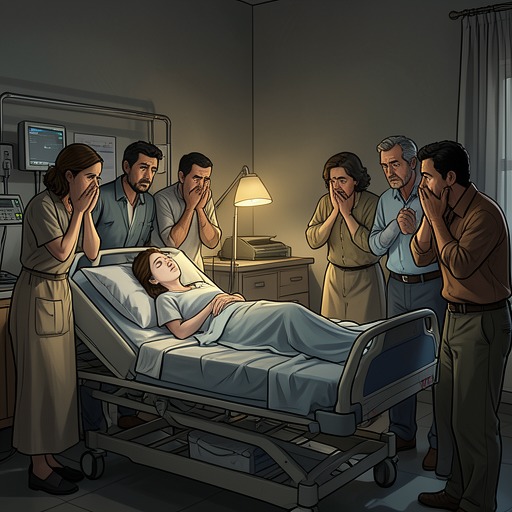
Despite this confrontation, Thomas does not remain fixed in hatred. When Mama Pearl is hospitalized, he joins the others outside through the emergency exit and prays that she will survive, calling her a good woman who saved his marriage on many occasions. Later, Gloria approaches him while his shoulders remain tense and guarded. She wraps her arms around his waist and tells him she loves him. Thomas answers that there is no love lost between them and that he has been trying to tell her that; he returns her declaration of love.
The exchange does not erase the history he has described. Its significance is that Thomas can hold injury and attachment together. He does not deny Gloria’s racism, deception, or role in his drinking, but neither does he let those facts make reconciliation impossible. In contrast to Jensen’s earlier need to divide people into victims and murderers, Thomas models a more difficult relation in which accountability and love can coexist.
Narrative Role and Ending
Thomas functions as a bridge between Jensen’s isolated past and his possible future. Through him, Jensen learns that family can be discovered late and still become real. Thomas’s story also broadens the novel’s account of survival: he survives illness, racialized hostility, alcoholism, and the consequences of Gloria’s secrecy, using music, faith, and recovery to construct an identity beyond the role assigned to him by his family.
By the novel’s ending, Thomas is part of the family gathered around Jensen and Janae’s daughter, Grace Pearl McCall. Jensen describes Mama Pearl holding her great-granddaughter while family members share food, arguments, and affection. Thomas is present within this expanded family circle, no longer merely the relative associated with an old wound but one of the people included in the life Jensen has built. His place in the ending confirms the novel’s movement from abandonment toward chosen and restored kinship: the family’s past remains painful, but Thomas helps make it possible for survival to become belonging rather than merely continued existence.